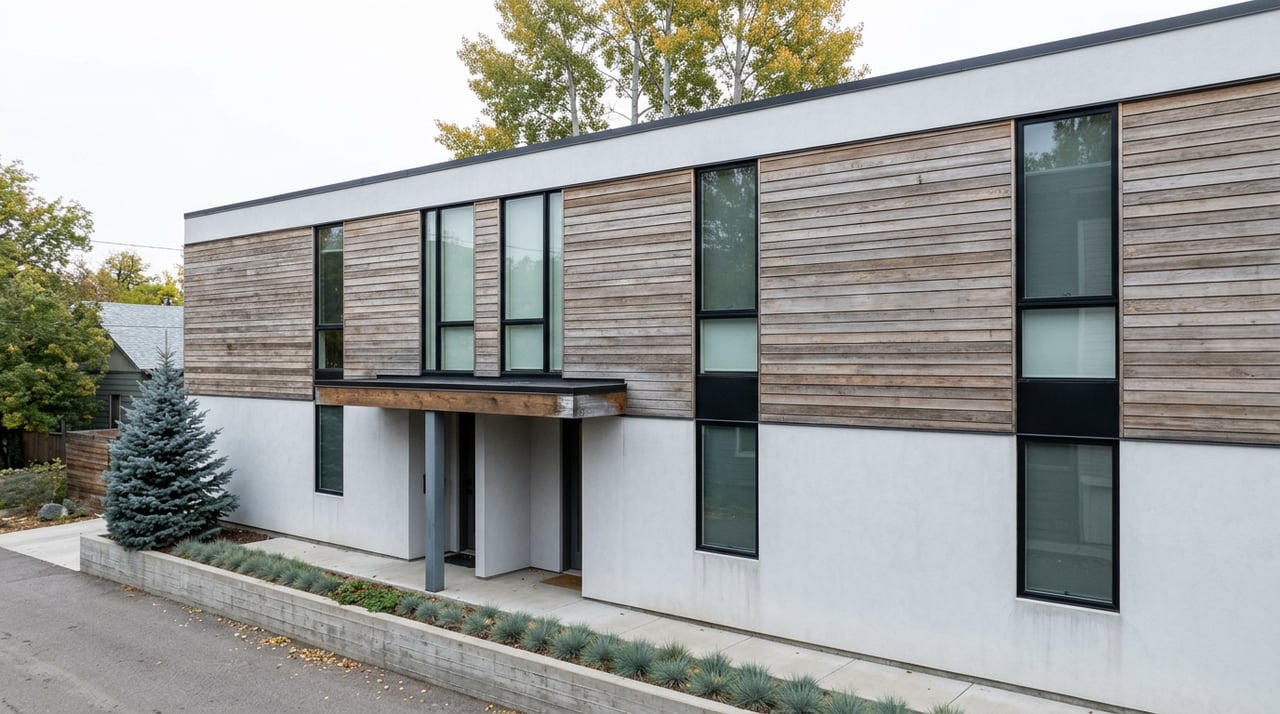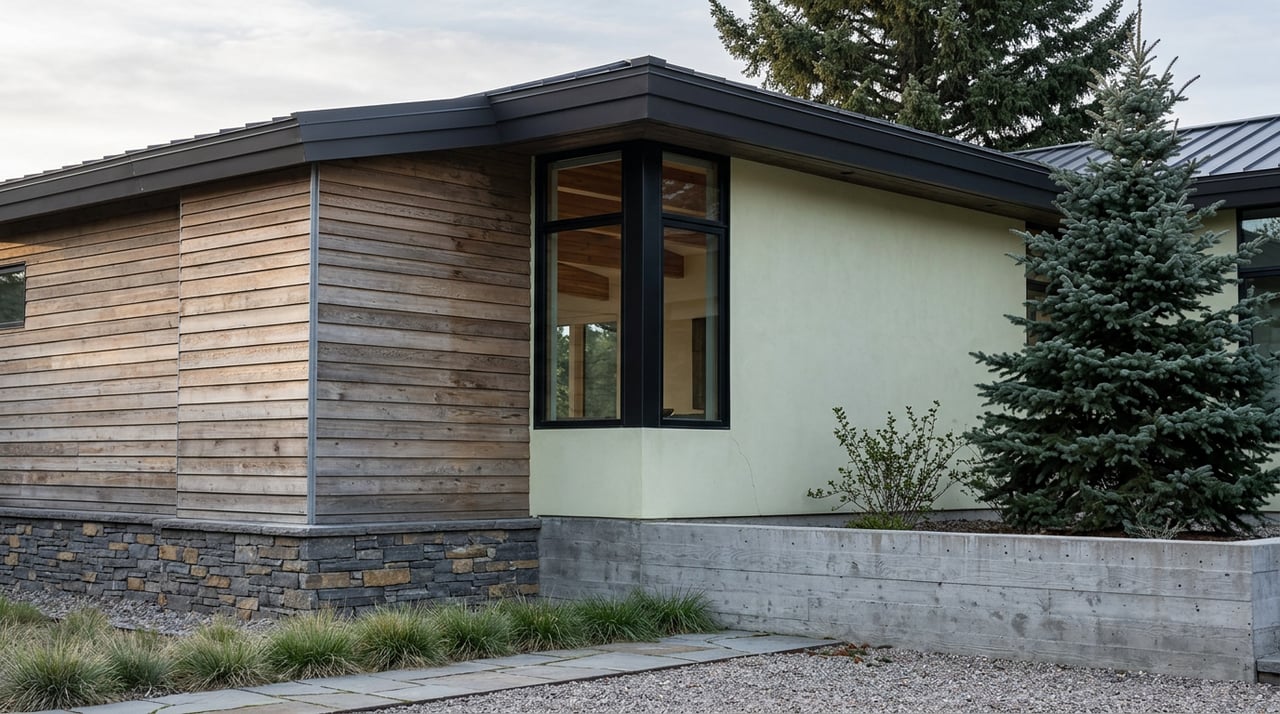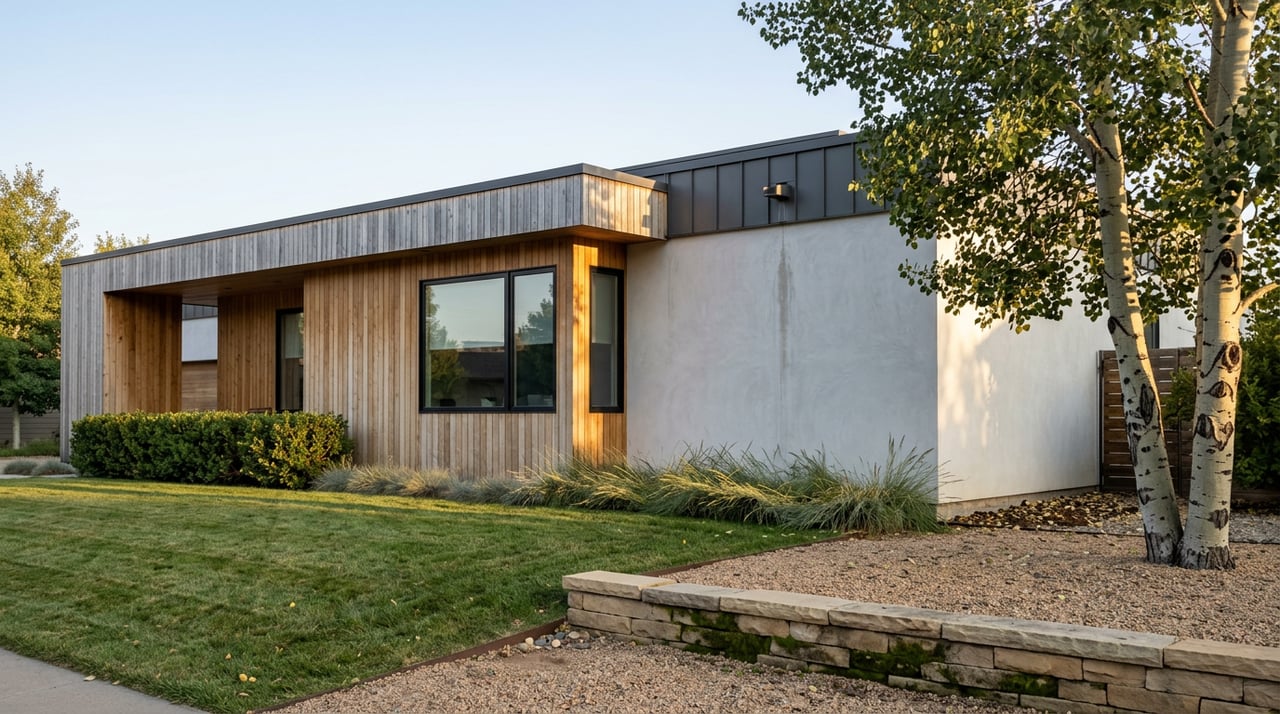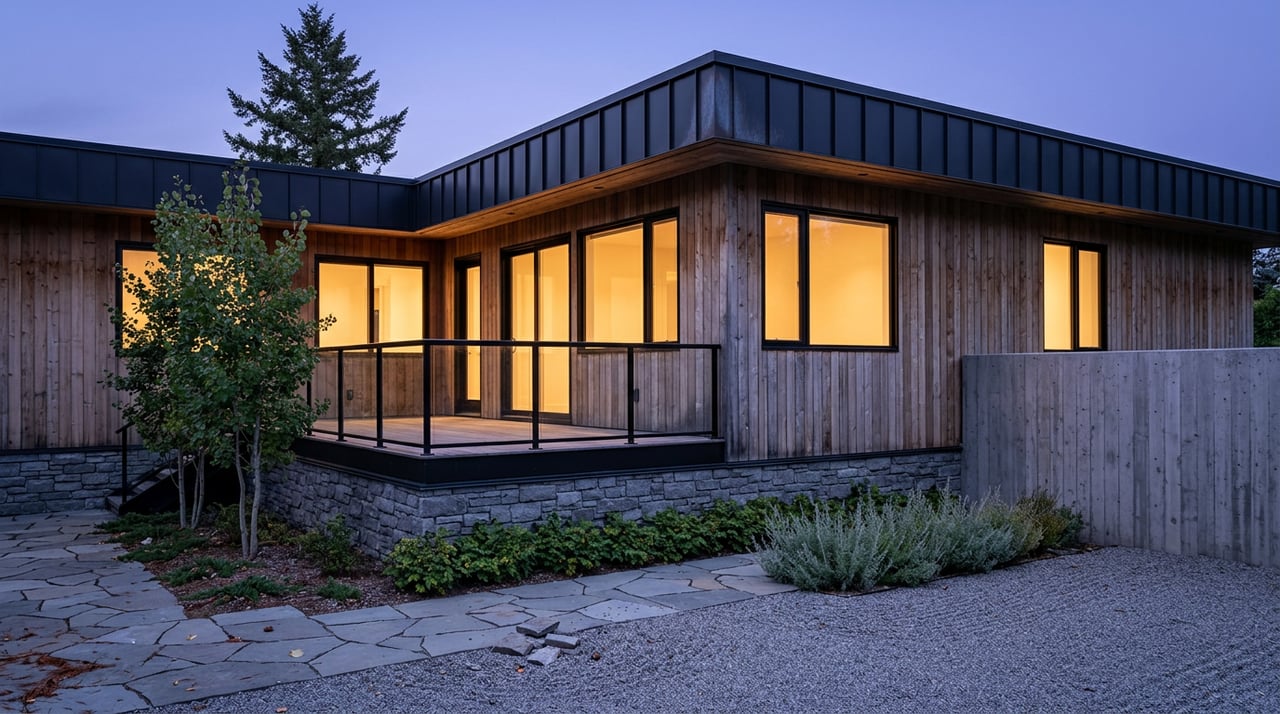
In 2012, a group of homeowners at Keator Grove, a 52-unit deed-restricted development on the south side of Highway 133, asked the Carbondale Board of Trustees to eliminate their resale price cap. Their argument was simple. Units that had sold for $450,000 a few years earlier were worth roughly half that in the recession-era market, and the deed restriction's formula did not just track the decline. It reset the ceiling to the new, lower number and then allowed only a few percentage points of annual appreciation from that point forward. When the broader market eventually recovered, the free-market home next door rode the recovery. The Keator Grove owner did not, because their price cap had already been rebased at the bottom.
That episode is more than a decade old, but the mechanism it exposed is the same one governing new units built in Carbondale today, and it is the reason a single median price number cannot tell you what you are actually shopping for in this town.
Two markets, one zip code
Search "Carbondale, CO homes for sale" and you will see listings from roughly $400,000 to well over $20 million sitting inside the same results page. That spread looks like ordinary luxury market variance, the kind you find in any resort town with both starter condos and river-front estates. It is not. A meaningful share of that low end is not undervalued inventory. It is a legally separate category of property, built under a town ordinance that has nothing to do with what a buyer is willing to pay.
Carbondale adopted its inclusionary housing ordinance over two decades ago, and it requires any residential development of more than five units to deed-restrict 20 percent of them. The mechanics are spelled out in Section 5.11 of the town's Unified Development Code, and the Town of Carbondale contracts the day-to-day administration, qualification review, and lottery process out to the Garfield County Housing Authority. The result, over twenty years of development cycles, is a named inventory of deed-restricted projects scattered through town: the 60 units at Thompson Corner inside River Valley Ranch, the 52 at Keator Grove, six condos at Lines III on West Main Street, seven townhomes at Mountain Sage on Main Street, three one-bedroom units at Colorado Place Condominiums off Colorado Avenue, and single units tucked into smaller subdivisions like Crystal Village.
None of those addresses trade like the free-market home three doors down. As of May 2026, the median list price across Carbondale's broader market sat near $2.7 million, at roughly $849 per square foot. A deed-restricted unit at Thompson Corner or Keator Grove is priced off an entirely different formula, one tied to a fixed annual appreciation rate rather than to what a buyer would pay on the open market. A 2022 regional housing study found that of more than 100 Carbondale listings on the market at the time, only six were priced under $1 million, and those six ranged from $565,000 to $875,000. That gap between the free-market tier and the deed-restricted tier is structural, not a snapshot that closed with the last market cycle.
A sub-$900,000 listing in Carbondale is not a bargain. It is a different asset class wearing the same zip code.
Three tiers, not one
The Garfield County Housing Authority's own accounting of Carbondale's inventory breaks the deed-restricted stock into three distinct categories, and buyers routinely conflate them.
- Traditional units carry both a buyer income and employment cap and a maximum resale price, typically the original price plus 3 to 4 percent annual appreciation tied to the Consumer Price Index. Most of the developments named above fall here.
- Hybrid units drop the income restriction on the buyer but keep the appreciation cap on the price. A buyer of any income can purchase, but the ceiling on what they can sell for later still applies.
- Resident-occupied units drop the price cap entirely. The only requirement is that the home be occupied at least nine months out of the year. It behaves closest to a free-market asset, but it cannot be held as a pure investment property or a full-time short-term rental.
A listing sheet rarely spells out which of these three a given unit falls under. The deed restriction itself, recorded separately from the deed, is where that distinction actually lives, and it is worth reading before a buyer falls in love with a price.
The reset that catches owners off guard
The Keator Grove dispute is worth returning to because it illustrates something the ordinance text does not make obvious: the appreciation cap is not a floor, it is a formula that resets. If a unit's assessed or sale value drops in a down market, the deed restriction does not preserve the owner's prior high-water mark. It recalculates the maximum future resale price from wherever the value happens to sit at the time of that sale, then allows modest appreciation forward from there. A buyer who purchases a deed-restricted unit during a soft market, in other words, can find their equity permanently anchored to that soft-market price, even years later when the surrounding free-market comps have fully recovered. This is not a hypothetical. It is the exact argument Keator Grove owners and Aspen Skiing Company, which owned 16 of the complex's 52 units, brought to the town board when they asked for the caps to be lifted.
The line is being redrawn right now
This is not a settled, historical arrangement. It is an active negotiation playing out in Garfield County hearing rooms through 2026.
The clearest example is Harvest Roaring Fork, a proposed 1,500-unit development on 283 acres near the Cattle Creek confluence, between Carbondale and Glenwood Springs. Under the county's Land Use and Development Code, the project as originally filed would have been required to deed-restrict 150 units. Developer Richard Myers of Texas-based Realty Capital went further in his initial pitch, offering up to 300 additional "Resident Occupied" units reserved for people working at least 30 hours a week in Garfield, Eagle, or Pitkin counties, with no income limit or price cap attached. The Garfield County Planning Commission still recommended denial by a 6-1 vote after a March 11 hearing, citing traffic, water, and wildlife concerns alongside doubts about whether the housing plan actually addressed local affordability. The developers withdrew the application in April 2026 to revise it, then resubmitted in July under the new name Harvest Village, this time proposing at least 450 deed-restricted units available only to Garfield County residents. The Cattle Creek Confluence Coalition, the opposition group formed around the project, is still organizing against the revised plan.
A few miles away, the McClure River Ranch planned unit development near the Waldorf School was approved by Garfield County commissioners in October 2025 with its own affordable housing plan built into the zoning, establishing deed-restricted dwellings as a use by right on the property. Compare that to Sages at Aspen Glen, a duplex subdivision inside the older Aspen Glen PUD that county commissioners approved in February 2026 without any affordable housing component at all, because the underlying PUD predates the current inclusionary rules. Two developments approved five months apart, one with a deed-restriction requirement baked in and one without, is a reminder that the ordinance does not apply uniformly to every parcel in the valley.
There is also a newer, quieter mechanism reshaping the line: the West Mountain Regional Housing Coalition's Good Deeds program, launched in August 2024, which pays to convert existing free-market homes into permanently deed-restricted ones. The coalition has already secured $100,000 in committed funding from the Town of Carbondale toward this effort. Under this program, a home that trades as pure free-market inventory today can become a deed-restricted asset tomorrow, voluntarily, in exchange for an upfront payment to the seller.
What this means before you tour a listing
If you are comparing Carbondale to other Roaring Fork Valley towns on price alone, the median you are looking at is not describing one coherent market. It is an average of free-market estates, resort-adjacent new construction, and a parallel inventory of income-capped, appreciation-capped, or occupancy-restricted units that will never behave like the comps around them. Financing compounds the difference. Fannie Mae and Freddie Mac both maintain separate guidelines for mortgages secured by resale-restricted properties, meaning a standard pre-approval letter does not automatically apply to every listing under a million dollars in this zip code.
None of this makes Carbondale a harder market to buy into. It makes it a market where the address on a listing sheet tells you less than the deed restriction attached to it, and where that distinction is worth confirming before you write an offer, not after.
A short FAQ
Can I get a standard mortgage on a deed-restricted home in Carbondale? Often, but not automatically. Fannie Mae and Freddie Mac both underwrite resale-restricted properties under specific guideline chapters rather than standard purchase terms, so confirm early with a lender familiar with these products.
Can a free-market home I already own in Carbondale become deed-restricted later? Yes, voluntarily, through programs like the West Mountain Regional Housing Coalition's Good Deeds buy-down, which pays an owner to add a permanent deed restriction in exchange for upfront funds.
Is a "resident-occupied" listing the same as a traditional deed-restricted one? No. Resident-occupied units only require nine months of annual occupancy and carry no income cap or resale price cap, which makes them behave much closer to free-market property than the traditional or hybrid tiers.
If you are weighing a Carbondale address against other options in the Roaring Fork Valley and want to know which tier a specific listing actually falls under before you tour it, Stefan Peirson can walk through the deed restriction, the resale math, and what it means for your financing and your exit. Schedule a Private Consultation.