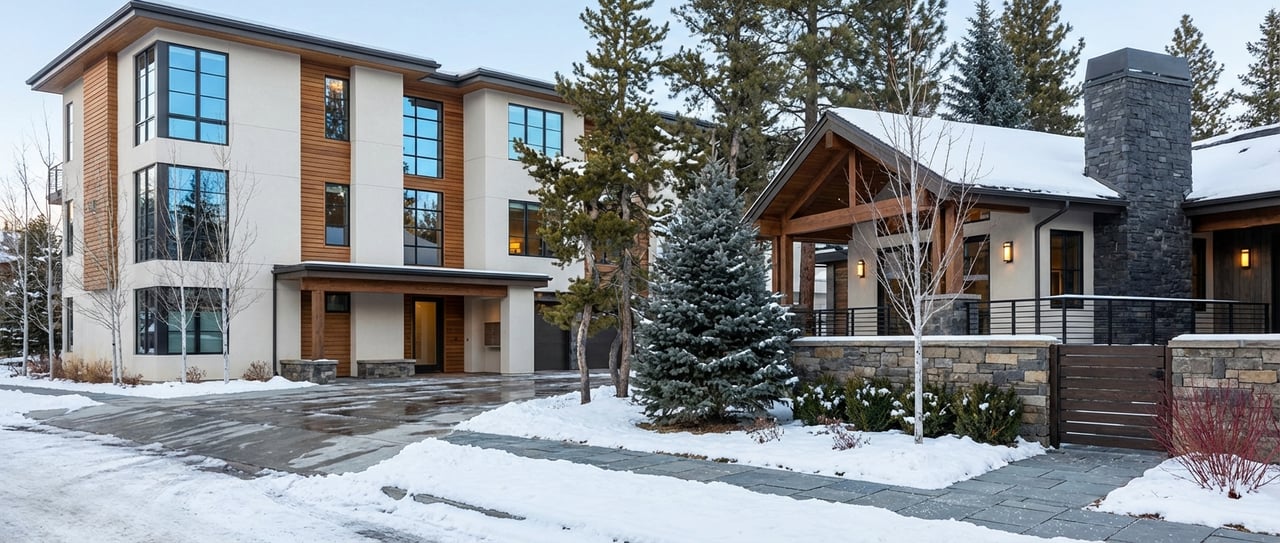
Is Aspen calling, but you are not sure whether a condo or a single-family home fits your life? You are not alone. In a resort market with high prices and limited inventory, the right choice comes down to how you plan to live, visit, rent, and manage the property. In this guide, you will compare lifestyle, costs, rental potential, and long-term value so you can decide with confidence. Let’s dive in.
Aspen market at a glance
Aspen and greater Pitkin County are high-price, low-inventory markets. County-level listing data shows a median price in the high single-million range as of October 2025, which provides a broad baseline rather than in-town Aspen values (Pitkin County overview). Within the city and its premium enclaves, single-family sales often sit in the multi-million to double-digit-million range, and small sample sizes can swing averages quickly (local market commentary). Condos and townhomes, especially near downtown and lifts, tend to be more liquid and provide an entry path into Aspen ownership.
Who thrives in a condo
Why choose a condo
- You want a lock-and-leave setup with minimal day-to-day upkeep.
- You value walkability to dining, culture, and lifts.
- You plan to use the property part-time and may explore short-term rentals.
Pros you will feel
- Proximity to town and the mountains, often with shared amenities like concierge or shuttles.
- Lower personal maintenance since the HOA handles exterior and common areas.
- In lodging-friendly locations, condos can command strong nightly rates due to convenience and walkability (Aspen events influence demand).
Tradeoffs to expect
- Monthly HOA dues and possible special assessments that affect your net costs. Review what dues cover, reserve funding, and assessment history (what HOA fees typically include).
- Rules that limit control over exterior changes and, at times, rental activity.
- Financing can require a condo project review, which adds documentation and can change loan-to-value allowances for second homes.
Who thrives in a single-family home
Why choose a home
- You want privacy, space, and the ability to customize.
- You prefer land ownership and outdoor areas for year-round living.
- You are focused on long-term scarcity value in a market with constrained lots (Aspen market insights).
Pros you will feel
- More privacy and outdoor living, plus flexibility to tailor the property.
- Strong appeal when the right buyer seeks a unique setting, which can support premium resale pricing.
- Potential for meaningful long-term value tied to location quality and lot scarcity.
Tradeoffs to expect
- Direct responsibility for snow management, landscaping, and systems maintenance.
- Higher insurance and mitigation costs in areas with wildfire exposure; use Colorado State Forest Service tools to understand risk and plan defensible space (wildfire mapping resources).
- In steep terrain, some properties may warrant avalanche awareness; consult the Colorado Avalanche Information Center for education and context (CAIC guidance).
Operating costs and taxes
Condos and townhomes typically bundle exterior maintenance, some utilities, building insurance, and reserves into monthly dues. High-service buildings can have higher dues, which is not bad if the services match your needs. Always read the HOA budget, reserve study, and meeting minutes before you buy (HOA cost overview).
For property taxes, Pitkin County applies state assessment rules to convert market value into assessed value, then applies mill levies. To estimate taxes, use the county’s process and confirm current rates for the specific parcel (Pitkin County tax FAQ). The exact number will vary by location and year, so verify during due diligence.
STR potential in Aspen
Revenue and seasonality
Short-term rentals can perform well in Aspen, but results are highly property-specific. Market snapshots show annualized occupancy around the neighborhood of 50 percent with average daily rates in the mid-thousands during 2024 to 2025, depending on size, amenities, and proximity to lifts (Aspen STR overview). Events and dual-season tourism concentrate bookings into key weeks, so a few high-revenue periods can drive much of the annual income (event-driven demand).
Permits, rules, and taxes
The City of Aspen requires STR licenses and updated its regulations on November 18, 2025. Permit types and tax categories vary, and platforms must display permit numbers. Confirm the property’s current permit type, compliance status, and tax class before you underwrite income (City STR updates). Rules differ in unincorporated Pitkin County, so verify jurisdiction early. Also note that many deed-restricted workforce housing units are ineligible for STRs and follow specific resale rules administered by APCHA (APCHA program overview).
Financing: second home vs. investment
Lenders treat primary residences, second homes, and investment properties differently. Fannie Mae defines second-home requirements, including year-round suitability and some occupancy by the borrower each year (occupancy definitions). Condo purchases often trigger a project review with different loan-to-value limits in limited reviews, especially for second homes in resort markets (limited review process). For higher price points, jumbo or portfolio loans are common. Get a pre-approval that matches your intended use before you shop.
Long-term value and resale
In Aspen, quality of location often drives value more than raw square footage. Proximity to the mountain, views, privacy, and lot size are major pricing levers in the single-family market (market perspective). Condos in core locations tend to trade more often and can be easier to exit in certain cycles, while unique homes in prime settings can achieve exceptional results when the right buyer appears. Use recent sold data and property-level comps rather than list prices for an accurate picture (county-level context).
Decision framework: condo or home?
Choose a condo if you want:
- Turnkey living with minimal maintenance.
- Walkability to dining, culture, and lifts.
- The option to pursue STR income in a building and zone that allow it.
Choose a single-family home if you want:
- Maximum privacy, outdoor space, and customization.
- Long-term scarcity value tied to land and location quality.
- Control over your property without HOA constraints.
If you are on the fence, start with how you will use the property in the first three years. Then map operating costs, likely rental rules, and risk management to that plan. The clearer your use case, the easier the choice.
Due diligence checklist
Use this quick list to stay focused during escrow:
- Confirm jurisdiction and zoning. Verify whether the address is inside the City of Aspen or unincorporated Pitkin County, and whether it sits in a lodging district or other overlay (city updates hub).
- Validate STR status. Ask for the STR permit number, permit type, and historical revenue if applicable. Confirm compliance with the current rules (City STR updates).
- Review HOA health. Request the budget, reserve study, recent meeting minutes, special-assessment history, and management contract (HOA cost overview).
- Check for deed restrictions. Ask for recorded deed language, APCHA approvals, and any resale formulas that apply (APCHA program overview).
- Assess hazards and insurance. Use CSFS mapping for wildfire exposure and request mitigation records. For steep-slope locations, review avalanche context through CAIC. Ask your insurer for availability and premium estimates early (wildfire mapping resources, CAIC guidance).
- Estimate property taxes. Use the county’s assessment framework and confirm mill levies for the parcel (Pitkin County tax FAQ).
- Align financing with use. Confirm whether your loan will be under a second-home, investment, jumbo, or portfolio program. For condos, ask your lender about project eligibility and limited review requirements (occupancy definitions, limited review process).
Ready to narrow your options to the best-fit properties for how you live, rent, and manage? Schedule a Private Consultation with Stefan Peirson for one-to-one guidance, confidential planning, and curated Aspen opportunities.
FAQs
What should Aspen condo buyers know about HOA dues?
- HOA dues often cover exterior maintenance, some utilities, building insurance, snow removal in common areas, and reserves. Review budgets and reserve studies to gauge future assessments (HOA cost overview).
How do Aspen short-term rental permits affect income plans?
- The City of Aspen requires STR licenses with rules updated in November 2025; permit types, compliance, and tax class must be confirmed before projecting revenue (City STR updates).
Are Aspen condos or homes better for STR performance?
- It depends on location, size, and amenities; AirDNA shows strong ADRs with roughly 50 percent annualized occupancy, and peak weeks drive outsized results in prime areas (Aspen STR overview).
What hazards should single-family buyers consider around Aspen?
- Wildfire exposure affects insurance and mitigation needs, and some steep-slope areas warrant avalanche awareness; consult CSFS resources and CAIC for context (wildfire mapping, CAIC guidance).
How are property taxes calculated in Pitkin County?
- Taxes reflect market value multiplied by the residential assessment rate and the local mill levy; confirm current factors and parcel-specific levies with the county (Pitkin County tax FAQ).