If you have ever pictured waking up to the sound of moving water in Basalt, you are not alone. Riverfront property here can offer a rare mix of scenery, recreation, and long-term appeal, but it also comes with rules and risks that are easy to underestimate. Before you fall in love with a stretch of the Roaring Fork or Fryingpan, it helps to understand how flood maps, setbacks, access, and privacy can shape the ownership experience. Let’s dive in.
Why Basalt Riverfront Homes Stand Out
Basalt’s rivers are not just a backdrop. According to the Town of Basalt planning documents, the community views its rivers as some of its most valuable resources, with strong support for preserving riverfront land for parks and conservation.
That matters to you as a buyer because it helps explain why riverfront inventory can feel limited and highly sought after. The town has also invested in public river amenities and river-adjacent open space, which adds to the appeal and the scarcity of these properties.
Roaring Fork vs. Fryingpan
Not all riverfront settings in Basalt feel the same. A home along the Roaring Fork may be more connected to parks, trails, and downtown activity, while frontage on the Fryingpan may be more closely tied to fishing access and wildlife-area rules.
For you, that means the river itself is only part of the story. Two homes with similar water frontage can offer very different levels of privacy, activity, and use depending on the exact parcel and its surroundings.
The Rewards of Buying Riverfront
Scenic value and scarcity
One reason buyers are drawn to riverfront homes is simple: there are only so many of them. Broader industry reporting continues to show a premium for waterfront property, and in Basalt that premium is likely supported by limited supply, scenic value, and access to recreation.
Still, the premium is not automatic. In this market, value tends to be highly property-specific because risks and restrictions can vary from one parcel to the next.
Recreation and lifestyle
Riverfront ownership can put you close to some of the amenities that make Basalt distinctive. The town’s river-oriented parks, open space, and public improvements create a lifestyle connection that many buyers find hard to replicate elsewhere.
Depending on the property, you may also be near fishing access, trails, and open space. That can make a riverfront home feel immersive and connected to the outdoor setting that draws people to the Roaring Fork Valley in the first place.
The Risks You Need to Weigh
Floodplain status matters early
One of the biggest mistakes a buyer can make is assuming a riverfront property will be easy to finance or insure. Basalt’s updated floodplain ordinance ties the town’s regulations to FEMA flood studies for both Eagle County and Pitkin County, and the town states that the updated flood studies and maps became effective on January 9, 2026, as outlined in the adopted ordinance materials.
FEMA also makes clear that the Flood Map Service Center is the official public source for flood hazard information. If a property sits in a Special Flood Hazard Area, floodplain management rules apply and mandatory flood insurance may apply as well.
Insurance is separate from homeowners coverage
Another common surprise is that standard homeowners insurance usually does not cover flood damage. FEMA states that flood insurance is a separate policy, which means you should request quotes early rather than treating insurance as a last-minute detail.
If a seller says a home is "on the river" but not "in the floodplain," verify that independently. Current maps, prior elevation certificates, and any parcel-specific engineering reports should be part of your review before you rely on listing language.
Site work can trigger added review
With riverfront property, even small changes can become bigger planning questions. Basalt’s flood ordinance shows that grading, fill, bank work, watercourse alterations, or major site changes may require engineering review beyond a standard building permit process.
Colorado law adds another layer. SB24-179 requires local floodplain regulations to meet or exceed FEMA minimum standards and comply with Colorado Water Conservation Board rules, so you should expect multiple levels of review rather than a single yes or no.
River Setbacks Can Limit What You Build
Basalt has long taken a protective approach to river corridors. The Basalt Master Plan states that the Rivers, Wetlands and Environmentally Sensitive Areas ordinance prohibits development within 50 feet, measured horizontally, from the identifiable high-water line on each side of the Roaring Fork River, the Fryingpan River, and other year-round streams. In some cases, larger setbacks may apply.
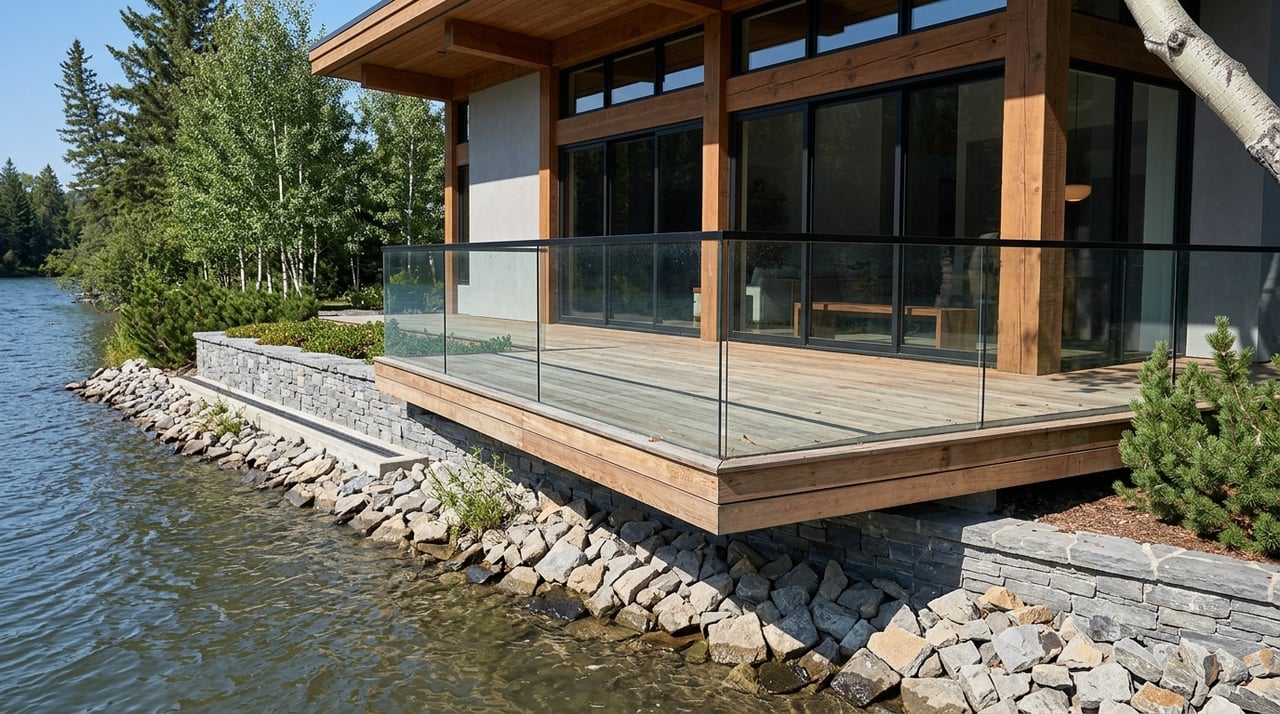
That is a major factor in how you evaluate a property. A beautiful river lot may still have a constrained building envelope, and features such as decks, landscaping, hardscape, or river-edge improvements may need more review than you would expect.
Design flexibility may be limited
If you are buying with plans to remodel, expand, or rework the outdoor spaces, do not assume those changes will be straightforward. On riverfront parcels, aesthetic ideas quickly turn into design, permitting, and engineering questions.
That does not mean the property is a poor choice. It means the value of the opportunity often depends on understanding the limits before you close, not after.
Privacy Depends on the Exact Parcel
Many buyers assume riverfront automatically means secluded. In Basalt, that is not always the case.
The town has public river-oriented amenities including Basalt River Park, Old Pond Park, and other pedestrian and open-space improvements, as described in the town’s planning materials. These features can make an area vibrant and highly usable, but they can also increase foot traffic, parking demand, and visibility for nearby homes.
Public access varies by river
This is another reason the difference between the Roaring Fork and Fryingpan matters. Colorado Parks and Wildlife notes that the Roaring Fork River has multiple public access points for shore and wade anglers, and some stretches support float fishing.
By contrast, some Fryingpan-related access areas have more limited public-use rules. For you as a buyer, the practical lesson is simple: check access, easements, nearby trails, and public-use pressure lot by lot rather than assuming the river name tells the full story.
A Smart Due Diligence Checklist
If you are considering a riverfront home in Basalt, a disciplined review can help you separate a great opportunity from an expensive surprise.
Confirm flood data
- Review the current FEMA flood map
- Ask for any elevation certificate, Letter of Map Amendment, or parcel-specific engineering report
- Confirm whether the structure or parcel is in a Special Flood Hazard Area
Verify setbacks and improvement limits
- Ask how far the home, decks, and hardscape sit from the identifiable high-water line
- Confirm whether additional river, riparian, or environmentally sensitive-area review applies
- Discuss any renovation plans early with the appropriate local offices
Check access and privacy impacts
- Identify nearby parks, trails, fishing access points, or easements
- Look at parking patterns and public-use activity near the parcel
- Visit the area at different times of day if possible
Price insurance and maintenance realistically
- Request flood insurance quotes early
- Budget for drainage, erosion control, and riparian landscaping needs
- Treat river-edge improvements as potentially higher-cost and more regulated than standard yard work
How to Think About Long-Term Value
Riverfront property in Basalt can be exceptional, but it is not a category where broad assumptions work well. Long-term value is often strongest when a property combines the visual and lifestyle benefits of the river with manageable flood exposure, clear access conditions, and realistic improvement potential.
In other words, the best riverfront purchase is usually not the one with the most dramatic marketing language. It is the one where you understand the flood status, setback constraints, insurance structure, and privacy tradeoffs before closing.
For many buyers, that kind of careful review is what turns a beautiful setting into a confident decision. If you are weighing riverfront opportunities in Basalt or anywhere in the Roaring Fork Valley, working with an advisor who understands the local details can make the process far more efficient. To schedule a private consultation, connect with Stefan Peirson.
FAQs
What makes riverfront property in Basalt attractive to buyers?
- Riverfront homes in Basalt are appealing because of their scenic setting, limited supply, and proximity to parks, open space, fishing, and other outdoor amenities tied to the Roaring Fork and Fryingpan rivers.
What flood risk should you check before buying a Basalt riverfront home?
- You should review the current FEMA flood map, confirm whether the property is in a Special Flood Hazard Area, and ask for any elevation certificates, map amendments, or engineering reports tied to the parcel.
What river setback rules affect Basalt riverfront property?
- Basalt planning documents state that development is generally prohibited within 50 feet of the identifiable high-water line along the Roaring Fork River, Fryingpan River, and other year-round streams, with larger setbacks possible in some cases.
What insurance issues come with buying riverfront property in Basalt?
- FEMA states that most homeowners insurance does not cover flood damage, so you may need a separate flood insurance policy and should request pricing early in the buying process.
What privacy concerns should you evaluate with a Basalt riverfront parcel?
- You should check for nearby parks, trails, fishing access, easements, and public-use areas because some riverfront locations in Basalt have more foot traffic and visibility than buyers expect.
What is the difference between Roaring Fork and Fryingpan riverfront property in Basalt?
- Roaring Fork frontage may be more connected to parks, trails, and public access, while Fryingpan frontage may be more influenced by fishing access rules and wildlife-area restrictions, so the ownership experience can vary significantly by parcel.