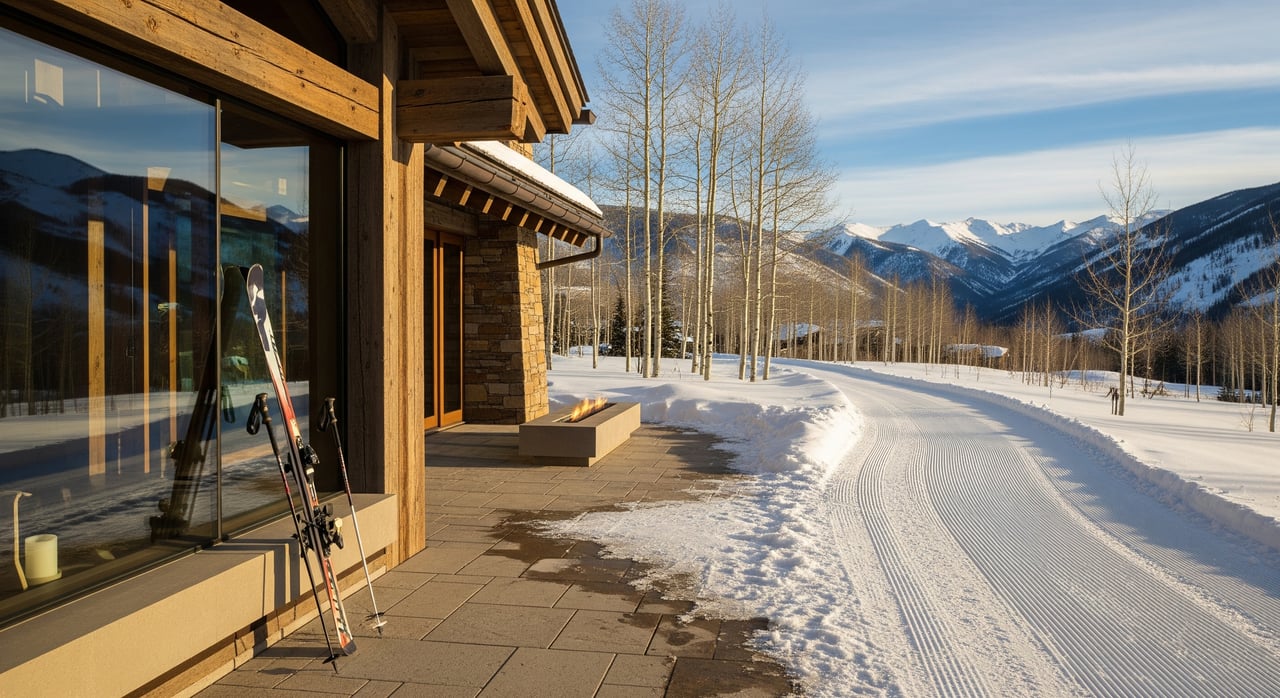
Is that condo really ski-in/ski-out or just near the lift? In Aspen, the phrase gets used loosely, and it can mean very different day-to-day experiences. You want the convenience you’re paying for, not marketing spin. In this guide, you’ll learn how ski access actually works here, how to compare options by proximity, and what to verify before you buy. Let’s dive in.
“Ski-in/ski-out” is a spectrum
Not all ski-in/ski-out claims are the same. There is no universal legal definition, and MLS descriptions vary. The core idea is simple: you can travel between the property and a maintained ski run or lift entry on skis or a snowboard without a substantial vehicle transfer. The details below are what change convenience and value.
Trail-connected, true ski-on/ski-off
This is the cleanest version. A groomed or marked trail connects the property directly to an on-mountain run or lift. You click in near the door, glide to the lift, and ski home. It feels effortless and is typically the most coveted access type.
Lift-adjacent, steps from the terminal
Here, you are at or very near a lift or gondola. You walk in boots from the building to the terminal or staging area. It is highly convenient, but the experience depends on lift operations and base area layout. If a lift is seasonal or reconfigured in the future, the feel can change.
Private connector or easement
Some HOAs or owners maintain a private groomed path, stairs, bridge, or corridor to reach a trail or lift. These are valuable, but they rely on recorded easements and clear maintenance responsibilities. You should verify rights, grooming obligations, and long-term agreements.
Shuttle-supported slope access
A frequent HOA or resort shuttle runs you to the base area. This is useful and can feel efficient if service is dependable, but it is not true ski-on/ski-off. You trade spontaneity for schedule coordination and ongoing HOA fees that support service.
Road, plaza, or right-of-way crossing
A short crossing of a road, plaza, or parking area may stand between you and a lift or trail. Many listings still say “ski access,” and it can be convenient, but you will handle gear differently than you would with direct glide paths. Note safety and weather impacts.
Drive-to with a short walk
If you need a vehicle to get to the slopes, you do not have ski-in/ski-out in the strict sense. This can still be a strong location choice for other reasons, but set expectations accordingly.
Aspen’s mountains shape access
Aspen Snowmass includes four distinct mountains: Aspen Mountain (Ajax), Snowmass, Buttermilk, and Aspen Highlands. Each has a different base area and neighborhood pattern, which changes how “ski-in/ski-out” functions on the ground.
Aspen Mountain (Ajax)
Central Aspen places you near the Silver Queen Gondola and downtown amenities. Many properties rely on pedestrian routes to reach lifts or use plaza access rather than trail-connected corridors. Lift adjacency can be excellent, but true trail-to-door is limited by terrain and town layout.
Snowmass
Snowmass has broad base-area neighborhoods and an extensive trail network. Direct trail connections and private connectors are more common here. You will find a wider range of properties that qualify as true ski-on/ski-off, plus HOAs that groom connectors and offer ski valet or shuttle services.
Buttermilk and Aspen Highlands
These areas offer a mix of proximity types. Some buildings are close to base lifts, while others rely on short walks or shuttle service. Changes in lift operations or event use can temporarily affect routes. You should verify seasonal patterns and backups.
Operations and seasonality
Lift operations, grooming, and trail alignment are controlled by the resort operator. Larger changes can require permits and may evolve over time. Early and late season, avalanche mitigation, and maintenance can all affect whether a connector is open. If access depends on a single path, ask about contingency plans.
Proximity tiers that matter
Think in tiers to compare apples to apples. The closer and more seamless the access, the higher the convenience and often the premium.
- Tier A — Doorstep or building-level: Direct trail or lift entry from the building. Click in, go. Highest convenience.
- Tier B — Immediate adjacency, 0–3 minute walk: Short walk across a plaza or groomed path. Very convenient and often treated like ski-in/ski-out by many buyers.
- Tier C — Short walk, 5–10 minutes: You walk to reach the lift or trail. Terrain, stairs, and snow conditions affect the feel.
- Tier D — Shuttle reliant: Service frequency and reliability become key. Can be efficient with good operations.
- Tier E — Drive to: Not ski-in/ski-out.
Amenities that narrow the gap
Strong HOA or resort services can narrow the practical gap between Tier A and Tier C. Examples include groomed private connectors, ski valet, heated lockers, and dedicated shuttles. These services improve daily ease, but they come with fees and the possibility of special assessments. Confirm what is included and how it is funded.
Risk and ongoing costs
Access that depends on a single lift, a seasonal connector, or a revocable agreement carries operational risk. Appraisers and buyers discount for that uncertainty. Maintenance for bridges, stairs, grooming, and snow removal adds recurring costs. Review budgets, reserve studies, and meeting minutes to understand financial health.
What to verify before you buy
Do not rely on the label alone. Use the checklist below to confirm practical access and long-term certainty.
Test the route in person
- Walk the full route in ski boots if you can. Time it and note stairs and surface changes.
- Confirm whether you can ski directly to a lift or grooming area without removing skis.
- Identify any road or plaza crossings and how they are managed during storms.
Confirm the paperwork
- Request recorded easements and any written rights for private connectors or corridors.
- Review HOA covenants, budgets, reserve studies, and shuttle schedules to see who pays and how service is delivered.
- Ask for any agreements with the resort operator if access depends on resort permission.
- Read recent HOA meeting minutes for discussions of access changes, assessments, or litigation.
Ask focused questions
- Is the connector inside the ski area boundary, and is the right perpetual or long term?
- Who is responsible for grooming and snow removal, and how often is it done during storms?
- Are there time or seasonal restrictions, or historical closures for avalanche control or construction?
- What is the backup plan if the connector is down, and how frequent is the shuttle?
- Are there rental license requirements or HOA rental rules that affect income potential?
Safety and access services
- Verify whether the route passes through controlled terrain or requires gates that may close.
- Confirm emergency access for first responders during heavy snow or events.
Appraisal, comps, and resale
- Ask for recent sales that explicitly document access type within the same complex or immediate area.
- Compare like to like: a true on-trail condo can be a better comp than a larger home that is near-slope.
- Consider long-term risk if access relies on agreements that could change.
Cost and tax considerations
- Quantify HOA fees that fund shuttles, grooming, valets, lockers, or corridor maintenance.
- Review any special assessments related to snow operations or infrastructure.
- Confirm property tax classification and how rentals, if allowed, are treated.
How access impacts value in Aspen
Direct trail connection or lift adjacency tends to command a premium because it saves time, simplifies gear logistics, and supports strong rental performance where permitted. In Aspen’s luxury market, convenience often ranks high in buyer preference. That said, premiums are not universal. They vary by neighborhood, building quality, and overall supply.
Amenities can boost functional convenience for properties that are a short walk or shuttle-reliant. If a Tier C property offers a heated locker room, ski valet, and a reliable shuttle, its day-to-day feel can compete with Tier B. The offset is ongoing cost. Always weigh service quality and financial structure against the purchase premium.
Operational uncertainty reduces value. If access depends on a lift that could be relocated, a temporary connector, or an easement with unclear terms, that risk shows up in price and liquidity. Documented, durable access with clear funding and maintenance is more defensible at resale.
Common Aspen scenarios, translated
- Trail-connected Snowmass condo with an HOA-groomed path: This is typically Tier A. Verify the recorded connector, grooming schedule, and HOA reserves that support it.
- Lift-adjacent residence near the Ajax gondola: Likely Tier B. Time the walk in boots, note plaza conditions in storms, and confirm base area operations.
- Highlands property with short walk and staircase: Often Tier C. Test the route with gear, understand snow removal obligations, and check for icy spots on cold mornings.
- Townhome marketed as “slope access” with a frequent shuttle: Tier D. Evaluate shuttle frequency, pickup locations, and peak-day capacity.
Your next step
You deserve a clear, on-the-ground understanding of ski access before you commit. A calm, methodical review of routes, easements, services, and comps will help you align lifestyle with value. If you want a seasoned advisor to walk the route with you, source the documents, and model the trade-offs by mountain and building, we are ready to help.
Schedule a Private Consultation with Unknown Company to evaluate specific properties and secure the right ski access for your goals.
FAQs
What does ski-in/ski-out mean in Aspen real estate?
- It means you can travel between a property and a maintained ski run or lift entry on skis or a snowboard without a substantial vehicle transfer. The exact convenience depends on the specific connector and proximity.
How do proximity tiers compare for buyers in Aspen?
- Tier A is doorstep-level access, Tier B is a 0–3 minute walk, Tier C is a 5–10 minute walk, Tier D relies on shuttle service, and Tier E requires driving. Closer tiers usually command higher premiums.
Are private connectors or easements reliable for access?
- They can be, but reliability depends on recorded rights and clear maintenance obligations. Request easement documents, HOA covenants, and grooming schedules to confirm durability.
Does a shuttle-served property count as ski-in/ski-out?
- A shuttle is helpful but is not true ski-on/ski-off. It introduces schedule coordination and fees, so weigh service frequency and costs against the convenience you want.
Can resort operations change my ski access over time?
- Yes. Lift realignments, trail changes, and seasonal operations can affect practical access. Ask about past changes, planned projects, and contingency routes.
How should I compare value between two “ski access” listings?
- Match access type, proximity tier, and amenity package first. Then review comps within the same complex or immediate area, and factor in HOA costs, easement quality, and operational risk.